
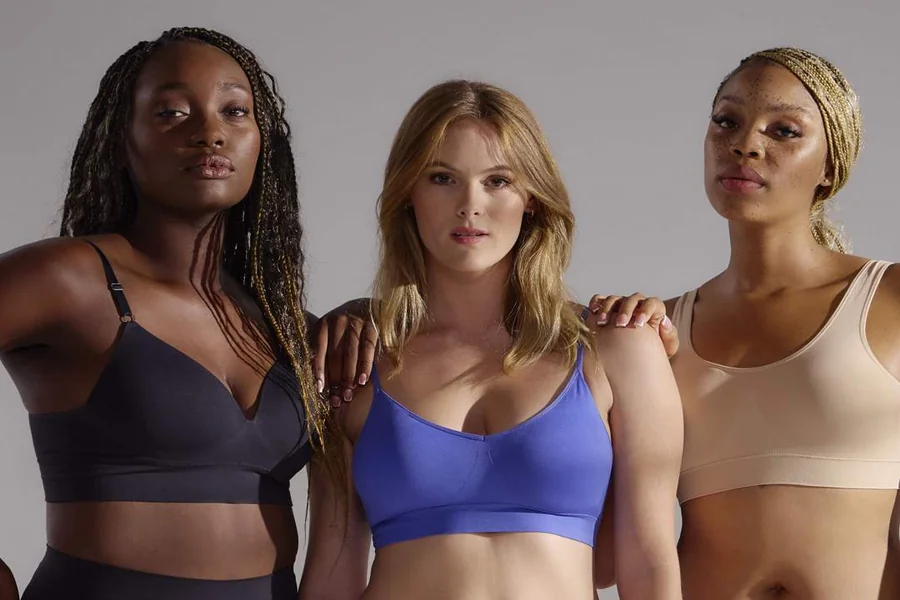
The innerwear industry has been moving in one clear direction for several years now, and that direction is seamless. Across bras, shapewear, bodysuits, and everyday briefs, the elimination of traditional seam construction has become the dominant design priority — not as a stylistic preference but as a functional one. The garments that perform best under modern clothing, across modern lifestyles, are the ones that have the least visible structure of their own.
Seamless construction is no longer a premium differentiator. It has become the baseline expectation for innerwear that is taken seriously — and understanding why requires looking at what seams actually do to a garment’s performance, and what their absence makes possible.
What Seams Actually Do to Innerwear Performance
Traditional innerwear construction relies on cut-and-sew methods: panels of fabric are cut into shapes and stitched together at the edges to produce the finished garment. The result is a functional piece, but the seams — particularly at high-contact zones like the waistband, the thigh openings, and across the torso — are structurally raised above the surface of the fabric. Against skin, this raised edge is barely noticeable. Against fitted clothing, particularly stretch or thin fabrics, it becomes a visible ridge that shows through the outer layer.
This is the fundamental limitation of seamed innerwear under modern clothing. Fitted jersey dresses, bodycon styles, and tailored trousers in stretch fabric are all in continuous contact with what’s underneath them, and a seam that raises even a millimetre above the garment’s surface produces a visible line that undermines the entire purpose of wearing a smooth base layer.
Seamless shapewear eliminates this at the construction level. Rather than cutting and stitching panels together, seamless garments are knitted as a single piece — the shape of the garment is produced by varying the knit structure during production rather than by cutting and joining separate sections. The result is a surface with no raised edges, no stitch lines, and no points where two panels meet under tension.
The Technical Difference That Changes Everything
The knitting technology behind seamless construction — most commonly circular knitting machines that produce tubular fabric structures — allows garment engineers to do something that cut-and-sew construction cannot: vary the compression, stretch, and texture of the fabric within different zones of the same garment, without any seam marking where one zone transitions to another.
This is what makes seamless shapewear genuinely superior from a performance standpoint, not just a visual one. In a seamed shapewear garment, the compression level in the midsection is determined by the fabric used in that panel, and the transition to a less compressive zone requires a seam. In a seamlessly knitted garment, the compression in the midsection can be gradually reduced as the knit moves toward the waistband or thigh — with no seam marking the transition. The graduation is smooth, continuous, and invisible.
For the wearer, this means a garment that compresses where compression is needed, releases where it isn’t, and produces no internal pressure points or visible transitions under clothing. The shaping effect is more natural, the comfort is higher, and the result under fitted fabric is cleaner than anything seamed construction consistently achieves.
Why Premium Shapewear Has Led the Way
The development and refinement of seamless innerwear technology has been driven primarily by the premium shapewear segment. Investment in circular knitting machinery and the expertise required to engineer zone-specific compression within a seamlessly knitted garment is substantial — the cost of development and production is considerably higher than traditional cut-and-sew methods, and the garments that result reflect that investment in their price point and their performance.
Premium shapewear produced through seamless knitting technology operates at a level of precision that mass-market alternatives don’t approach. The compression mapping — the specific placement of firmer and lighter zones within the garment — is engineered to anatomical measurements rather than approximated through panel shapes. The waistband construction maintains its position without rolling or digging because the transition from the waistband to the body of the garment is gradual and continuous rather than abrupt. The leg openings finish without a visible edge because there is no edge to raise.
This precision is what justifies the investment in premium shapewear for women who wear fitted clothing regularly and need their base layer to perform reliably across long days, formal occasions, and demanding outfit categories. The performance gap between a well-engineered seamless garment and a lower-quality alternative is experienced immediately and consistently — not in the first few minutes of wear but across the full duration of a day, when the quality of construction either holds up or reveals its limitations.
What Seamless Construction Enables Beyond Shapewear
The influence of seamless construction has extended well beyond shapewear into the broader innerwear category, and this expansion is one of the clearest indicators that seamless is the future rather than a segment-specific development.
Seamless everyday briefs, seamless bralettes, and seamless lounge and activewear have all grown significantly as categories, driven by the same underlying demand: clothing worn against the body should contribute as little visible structure as possible while performing reliably. The consumer who chooses seamless shapewear for formal occasions tends to migrate toward seamless construction across their entire innerwear wardrobe once they’ve experienced what the absence of seams produces under clothing.
This migration is reshaping what the innerwear market produces at every price point. Seamless construction techniques have become more accessible as the technology has matured and scaled, which means seamless options are available at mid-market price points that would previously have required premium shapewear investment. The baseline expectation for innerwear quality has risen across the board as a result.
How to Identify Genuinely Seamless Construction
Not all garments described as seamless are constructed with the same technique or to the same standard, and the distinction matters for performance.
Truly seamlessly knitted garments have no stitched seams anywhere on the body of the garment. The waistband, the leg openings, and all torso zones are continuous with the rest of the knitted structure. Running a hand across the inside of the garment should reveal a completely smooth surface without any ridge or raised line.
Some garments described as seamless use flatlock stitching — a technique that reduces the height of a seam significantly but doesn’t eliminate it entirely. Flatlock seams are less visible under clothing than standard seams and are an improvement over traditional construction, but they are not the same as seamless knitting and don’t perform identically under the most demanding fabrics.
Premium shapewear produced through fully seamless knitting is identifiable by the complete absence of any interior seam lines and by the gradual, imperceptible transition between compression zones. The garment feels like a single, uniform piece of technically varied fabric rather than a collection of panels held together by stitching — because that is, in the most literal sense, what it is.
The Direction Innerwear Is Heading
The movement toward seamless basewear in innerwear reflects a broader alignment between what modern clothing demands from its base layers and what construction technology is now able to deliver. Seamless shapewear and premium shapewear produced through advanced knitting methods have set a performance standard that the rest of the innerwear market is now working to reach.
The garments that will define the innerwear category going forward are those that disappear completely under clothing — that provide support, shaping, and comfort without contributing any visible structure of their own. Seamless construction is the method that makes this possible, and its continued development and adoption across price points and garment categories is the clearest signal that this is not a direction innerwear is heading toward. It is the direction innerwear has already moved in — and the rest of the market is catching up.